The Almost, But Not Quite, Rainforest of Florida’s First Coast

The Almost, But Not Quite, Rainforest of Florida’s First Coast

,

To see moss or lichen on a tree is to be in a rainforest, right? This was the assumption I told myself as a kid growing up on a dry short grass prairie. My experience with forests, particularly rainy ones, was obviously very limited. For years and years afterwards I vacationed with family in Florida, where we would spend most of our time on the beach or at a theme park. As we drove to our desired destination, I recall looking out at the dense forest canopies all across the state and being completely confident that I was looking at a rainforest. If I had ever spoken to an ecologist as a teenager, they probably would have told me not so fast!
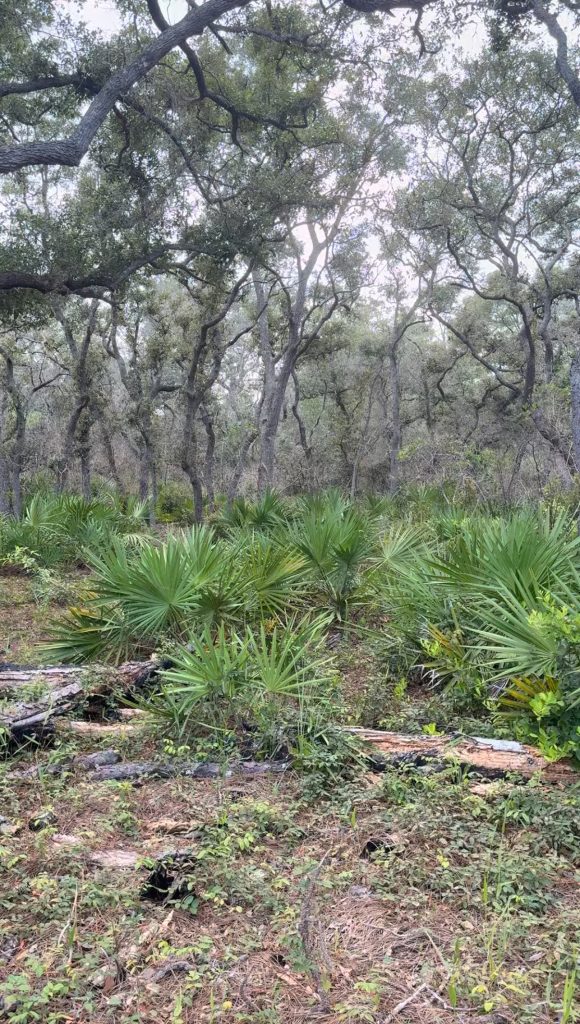
Years later, I returned to Florida for an extended vacation and explored a bit more of the natural landscape. I discovered mostly a mix of salt marshes and scrubby flatwoods. The scrubby Flatwoods in particular were fascinating to me because of their inherent dry qualities and propensity for fire, a contradiction to my previous assumptions about Florida being a rainforest that could never experience the wildfires seen across the western United States. Scrubby flatwoods are discussed further in our previous story about the Manasota Scrub Preserve near Florida’s gulf coast.
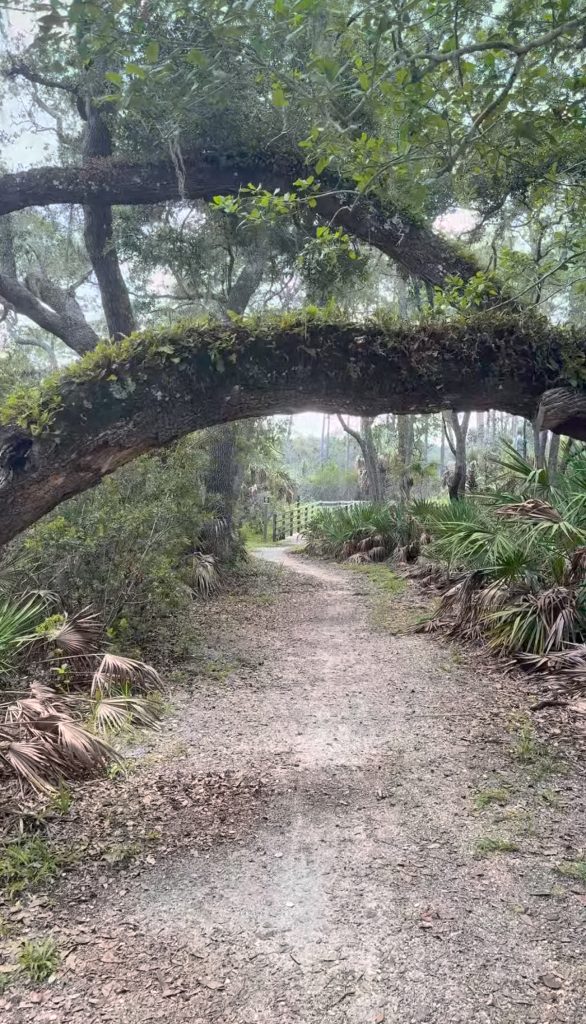
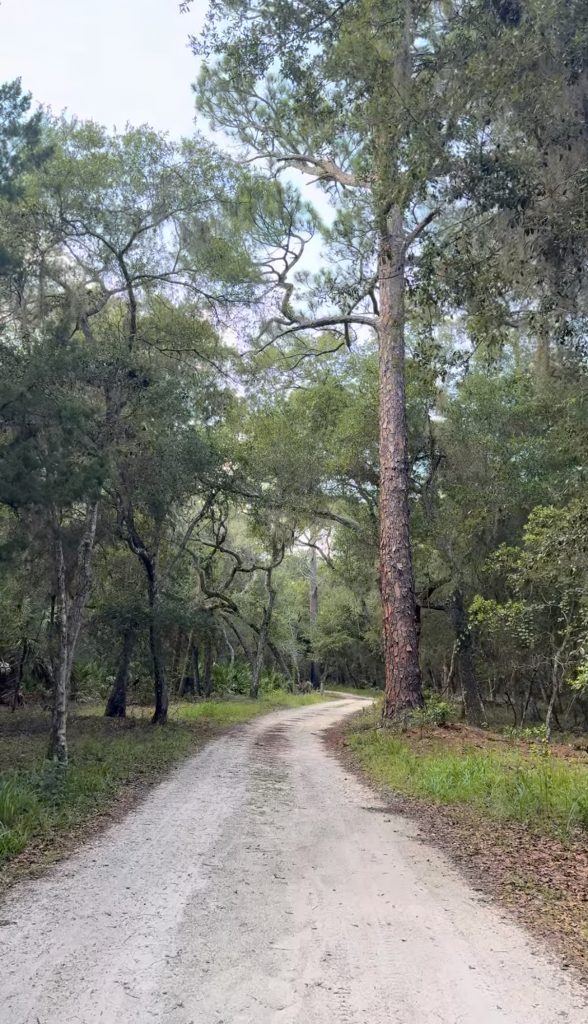
So the flatwoods aren’t actually rainforest, okay, so what? Surely most of the rest of the state must be, right? Not so fast again. Upon returning to northeastern Florida, sometimes known as the First Coast for its deep historical roots, I checked out some local nature preserves and was 100% convinced I was in a rainforest! On Amelia Island, which is just south of the Georgia border, a stunning state park with an incredible historical fort sits at the very northern tip of the island. It’s a great spot for history buffs, but also sports a nature trail that meanders through a dense, swampy forest. We took a short loop through this trail and were constantly pushing giant palm leaves out of our faces as we kept watch for alligators and admired the lichens and mosses hanging off the trees. How could anything but a rainforest produce so much green bounty?

The reality is that all of these forest systems exist on a gradation that is difficult to classify with categorical terms. This area, and much of the forest leading up to the actual borders of Florida’s real rainforest, is probably the closest you get to being in a rainforest without actually being in one. But according to ecological definitions, it just doesn’t make the cut.
So how do ecologists decide what is a rainforest and what isn’t? They determine this definition with the use of multiple measurable criteria. The criteria is not always strictly defined and relies of the presence of multiple ecosystem markers, as well as the ecosystem’s location relative to the equator. Generally, rainforests are biomes with high enough amounts of rainfall that support the presence of a three-tiered plant canopy, support for epiphytes (plants that grow on other plants), and sometimes lack of dominance of any particular tree species.

In Florida in particular, the climate ranges from a subtropical to tropical climate classification. In subtropical and tropical environments, an ecosystem is classified as a rainforest climate when there is essentially no dry season and at least 2.4 inches of rainfall per month throughout the year on average. Only one area of Florida meets this environmental definition, and this region encompasses part of the southeastern corner of the state surrounding Cape Canaveral and Miami. The rest of the state has a marked, discernible dry season, leading to ecosystems that have evolved to tolerate fire regimes.

Many online sources will support the idea that Florida does not support any tropical rainforests. The likely reason I can discern from this is that the climate area that would support rainforests at all is highly developed, with little native ecosystem remaining for classification and study. But it’s important to note that this insinuation is an oversimplification of Florida’s climate capabilities sans human influence. It is likely that Florida’s natural rainforest would not be as diverse or experience as much rainfall as locations such as the Amazon, but they would likely meet our modern definition for what makes a rainforest.

Since we don’t have a super clear way to compare the edge of Florida’s rainforest region to the First Coast due to these development patterns, we can compare with a little more specificity to the forests of large rainforests like El Yunque National Forest of Puerto Rico, the only protected tropical rainforest in the United States’ protected national forest system.

As noted before, the presence of epiphytes, or plants that grow on other plants, is one defining characteristic of rainforests. The forests of the First Coast do actually contain a few epiphytes, such as the famous Spanish Moss that grows on Live Oak trees, as well as some fern species. However, El Yunque contains a greater diversity of epiphyte species. Diversity of tree species is also much greater in a forest like El Yunque, which boast multiple hundreds of tree species. The forest of the First Coast tends to instead be dominated by a more limited number of overhead species, such as the Live Oak and Slash Pine.

Lastly but perhaps most importantly, the sloped areas of El Yunque receive over 200 inches of rainfall per year, the highest of all US national forests. Meanwhile, the First Coast city of Jacksonville receives an average of only 52 inches per year. Compare this average to Miami, the tropical rainforest climate of Florida, which receives about 61 inches of rainfall per year, putting it just over the general threshold for rainforest categorization. We can imagine that such an environment would not meet the heights of diversity seen in El Yunque, but would perhaps support a slightly different ecosystem and broader set of species than the First Coast. This comparison highlights the gradient nature of these ecosystem classifications.
Discovering Spring Ephemerals in Wilfred J. Turenne Wildlife Habitat

,

Discovering Spring Ephemerals in Wilfred J. Turenne Wildlife Habitat

Growing up in the dry mountain west, I never learned to appreciate the coming of spring as I now do living in New England. I spent my teenage years living in a Ponderosa Pine forest, with few deciduous trees and a simple, shortgrass prairie understory. While I recall the occasional colorful flower pops of the parasitic Indian Paintbrush and some purple violet-like flower that I always swore had to be invasive, compared to Massachusetts, the rain shadow of the Rocky Mountains is a barren wasteland.

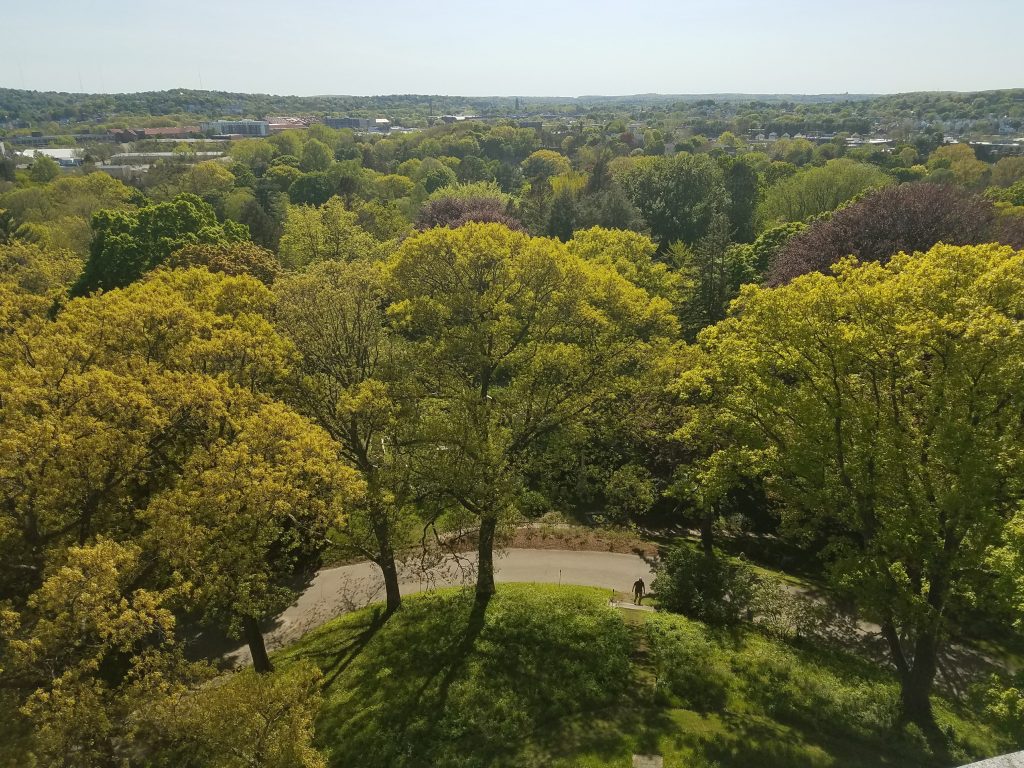
My first year in Massachusetts, I had no idea I should even be paying attention to the beauties of spring. I lived in a fairly dense neighborhood in which many of the blooming treasures of the northeast were out of sight, out of mind. The next year, I went to the historic Mt. Auburn Cemetery for the first time, and from the famous lookout tower, noticed the interesting fall-like effect of spring in this region. The young, vibrant greens of new leaf growth mixed in with what looked to be beautiful hues of orange, pink, red, violet, and yellow, produced by trees in various stages of flower bloom and leaf out.

Yellows and violets in late spring, as seen at Mt. Auburn Cemetery

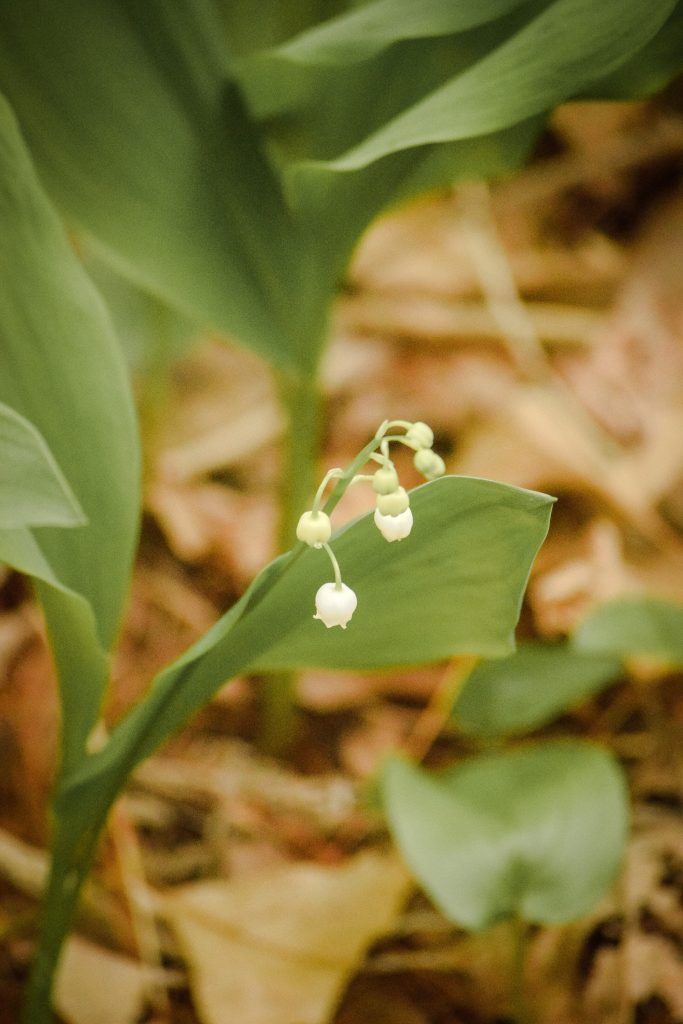
As each year went by, I noticed more little details every spring. I noticed the pollen dust of the great White Pines, coating everything in a mildly yellow residue, similarly but not as intensely as Ponderosa Pines do. I noticed the tiny red flowers of the ubiquitous red maples, creating stunning dustings of light red and pink across the landscape. I noticed the thick, short leaves and tiny bell-like flowers of the invasive Lily of the Valley poking up from the ground, as well as the invasive carpet of periwinkles, beautiful but crowding out the forest floor of native species.

Lily of the Valley flowers

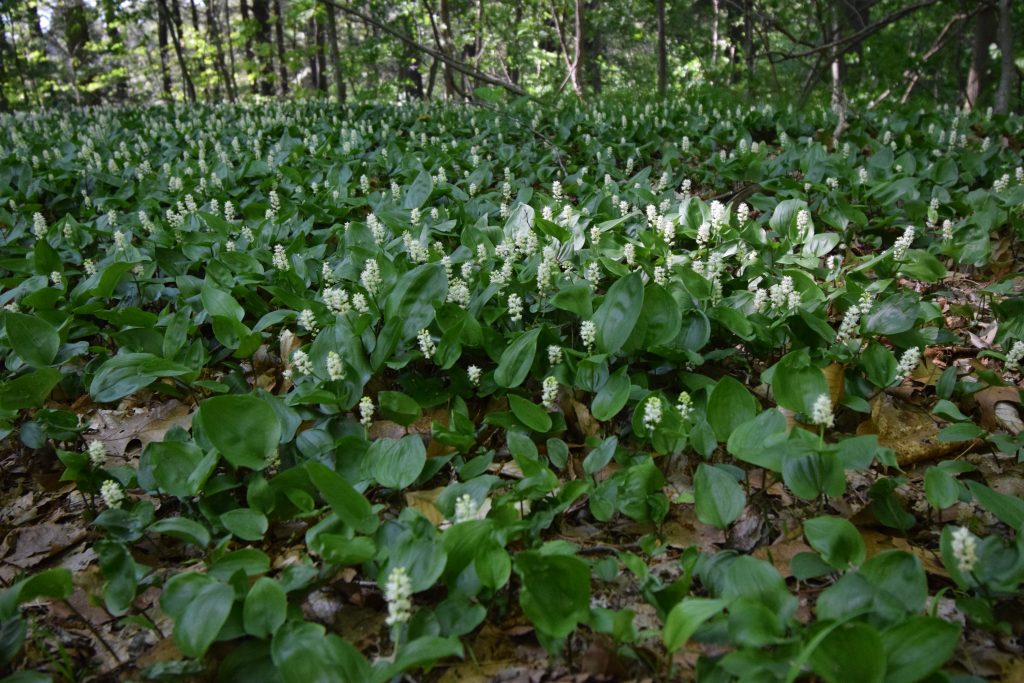
From this journey of slow discovery, I found myself in the Wilfred J. Turenne Wildlife Habitat in Southborough, Massachusetts, once again seeking out the beautiful changes of spring. This time, I discovered what is known as Canada Mayflower on the forest floor. Very similar to the prior-mentioned Lily of the Valley, they have rich green leaves that poke right out of the ground this time of year and have white flowers, but they tend to be a little smaller and have a different flower structure. Rather than bell-like flowers hanging downward, a lupine-like clump of tiny flowers grows upwards.

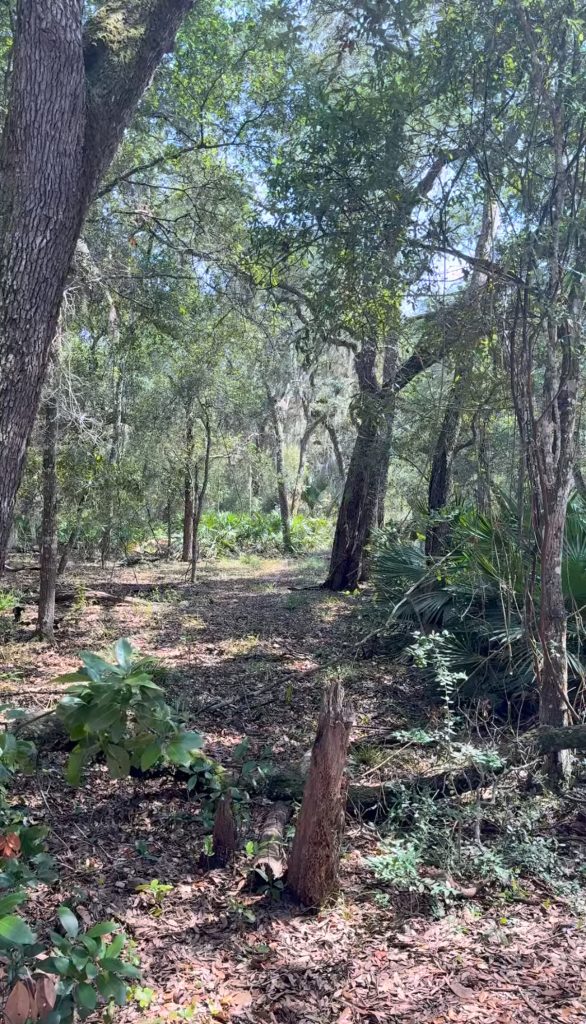
Mid Spring Conditions in Wilfred J Turenne Wildlife Habitat lend themselves to spring floral growth in the understory

Canada Mayflower is like Lily of the Valley in that it prefers slightly shaded areas and grows well amongst the trees. These two flowering plants, in their rush to beat the leaf out of trees, introduce us to the broader world of spring ephemerals. While researching the Canada Mayflower, I found many resources that describe the plant as a spring ephemeral. But when we dig deeper into the true definition, neither of these plants fully fit the definition.

Carpet of Canada Mayflower

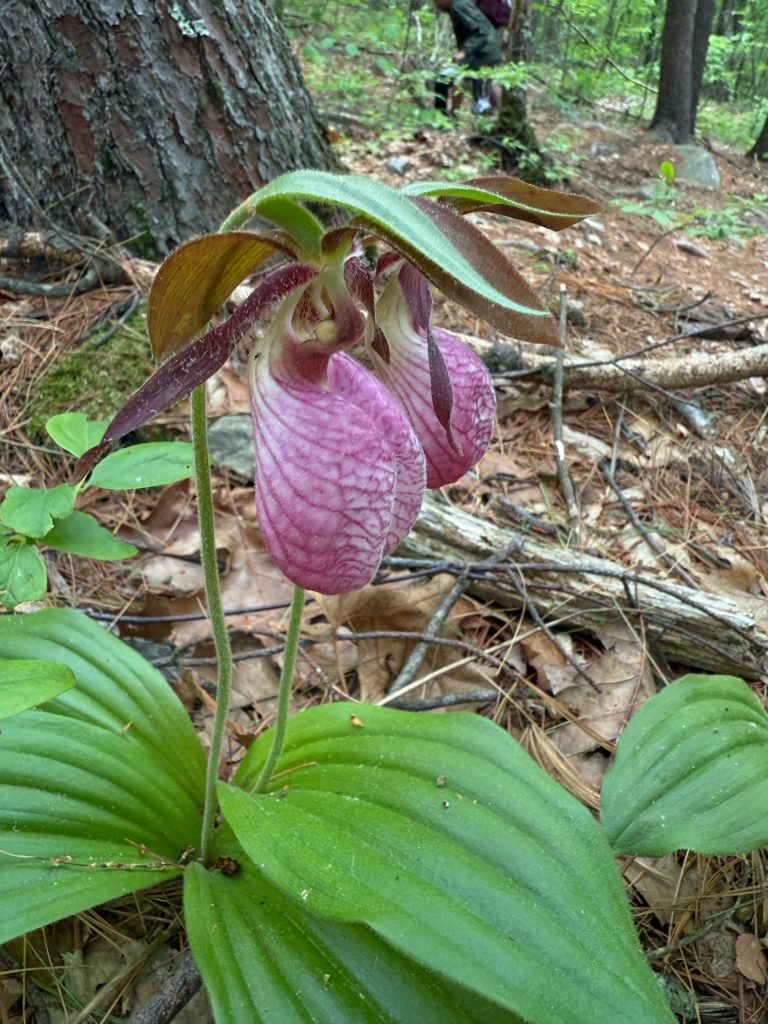
So what is a spring ephemeral? Essentially, it is any small, flowering plant that rapidly grows in a forested area in different spring conditions, but quickly shrivels into nothing once the spring conditions continue changing. Canada Mayflower and Lily of the Valley don’t technically fall into this category because their leaves continue to live and thrive on the ground for months afterwards. For comparison, a true spring ephemeral called Lady Slipper grows quickly in the spring, only for the entire plant to shrivel weeks later, the plant’s stunning flower and broader structure having already done its job for the year. Interestingly, Lady Slipper blooms later than Canada Mayflower, and I didn’t encounter them until weeks after my spring trip to the Wildlife Habitat.

Lady Slipper flowers

Other fantastic spring ephemerals to be on the lookout for in Massachusetts include Trillium, Dutchman’s Breeches, and Columbine. You can view a broader list of spring ephemerals listed on Mass.gov.

A Surprise Stand of Pitch Pine in Middlesex Fells Reservation

,

A Surprise Stand of Pitch Pine in Middlesex Fells Reservation

Around the Boston Metro and extending into many areas of New England, the most dominant, and well known, pine tree is the White Pine. In fact, the White Pine is the state tree of Maine, is featured on top of the Massachusetts State House in the form of a pine cone statue, and was one of the most historically significant early exports in the region after colonization. So ubiquitous is the zeitgeist of the White Pine, that many New England residents know nothing of the other pines that thrive on their home turf. Explore enough local parks though, and you may be lucky enough to discover the rugged Pitch Pine.

I first encountered a stand of Pitch Pine up in Acadia National Park in Maine. It is the dominant species atop the summit of Kebo Mountain, the shortest summit in the park. I did not initially realize that the stand is just one of many spots in New England where you can encounter a forest dominated, or codominated by Pitch Pine. In fact, this stand of Pitch Pine is actually at the very northern terminus of the Pitch Pine’s native range, and it is much more common down in southern New England and into the Southern Appalachians. It also forms the canopy of the famous New Jersey Pine Barrens, which is an ecological anomaly on the northern east coast in its shear scale of pine growth.

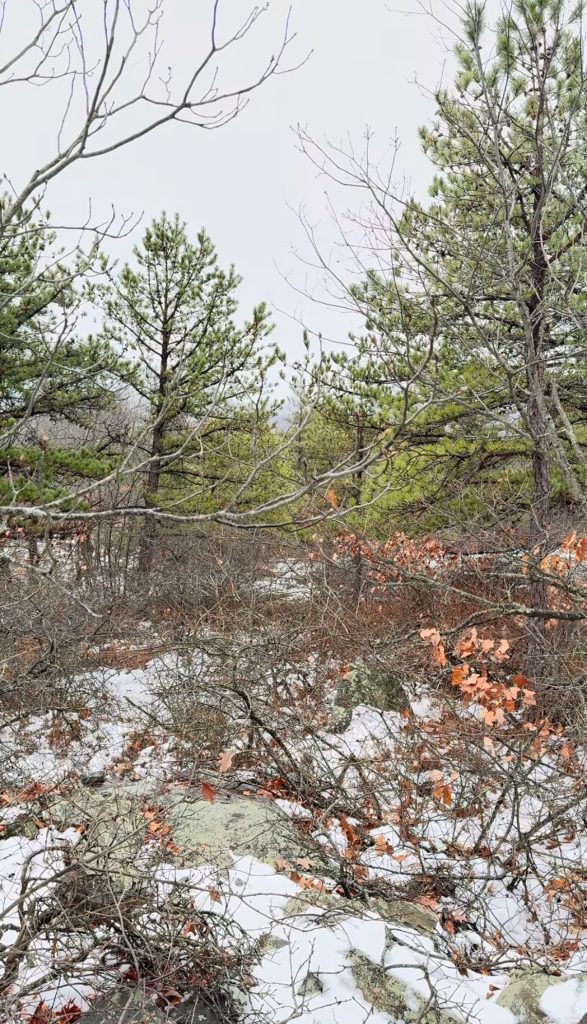
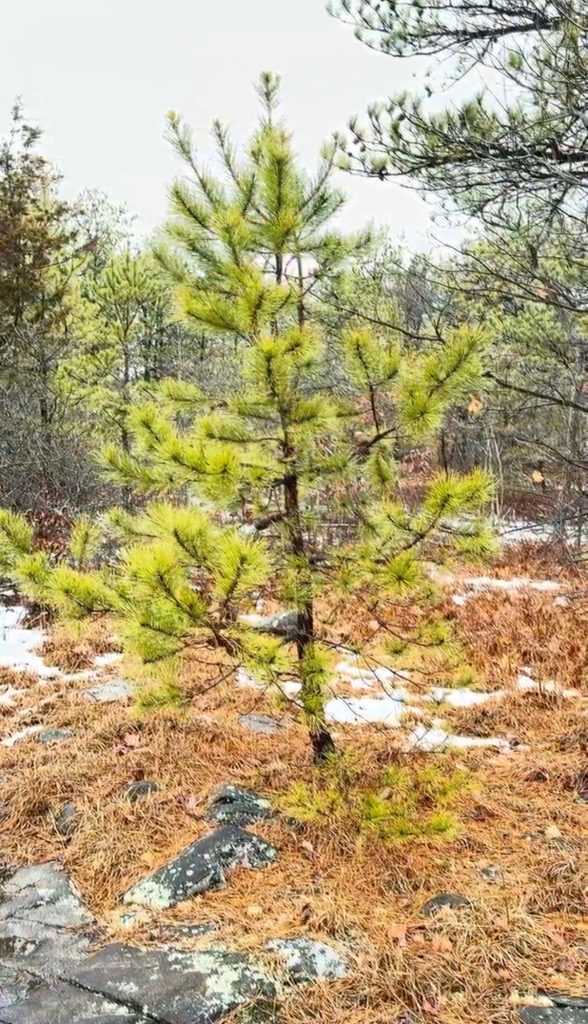
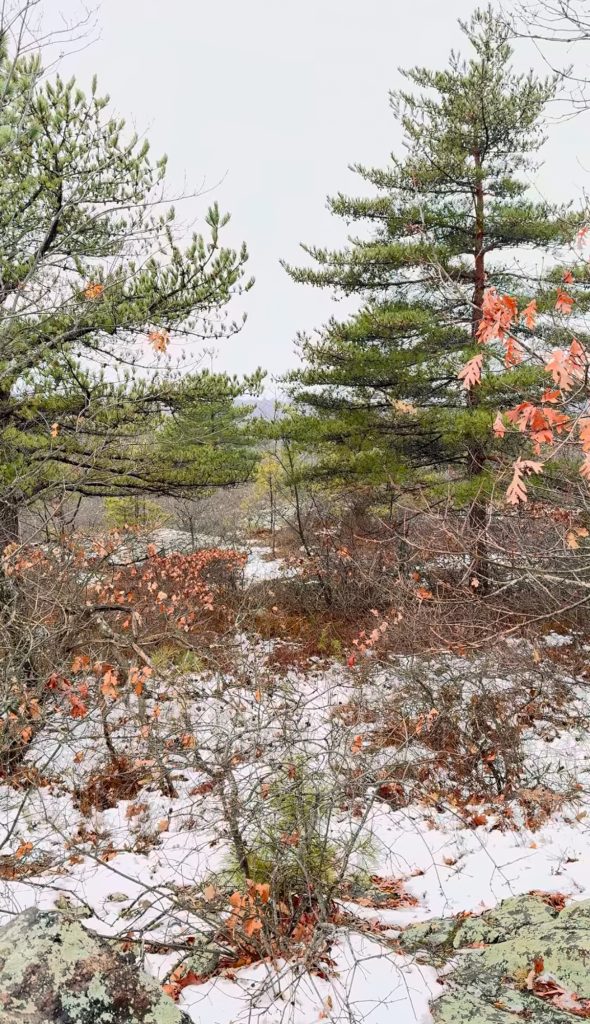
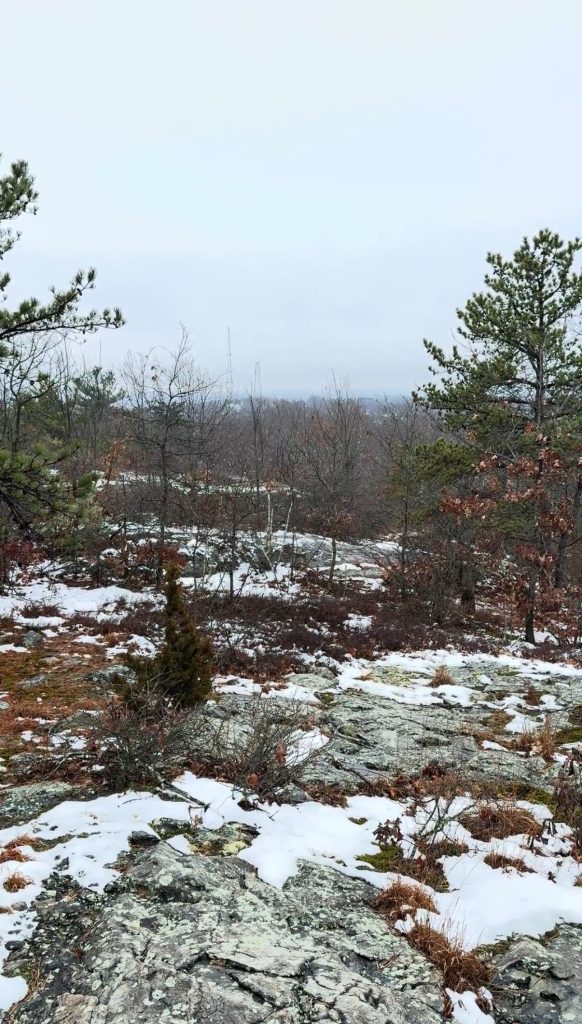
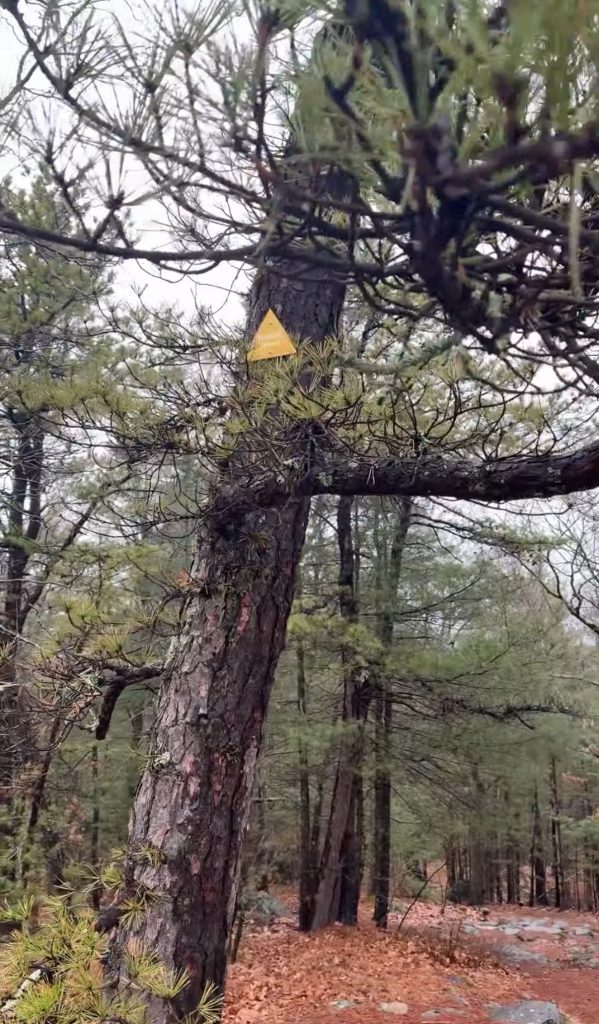
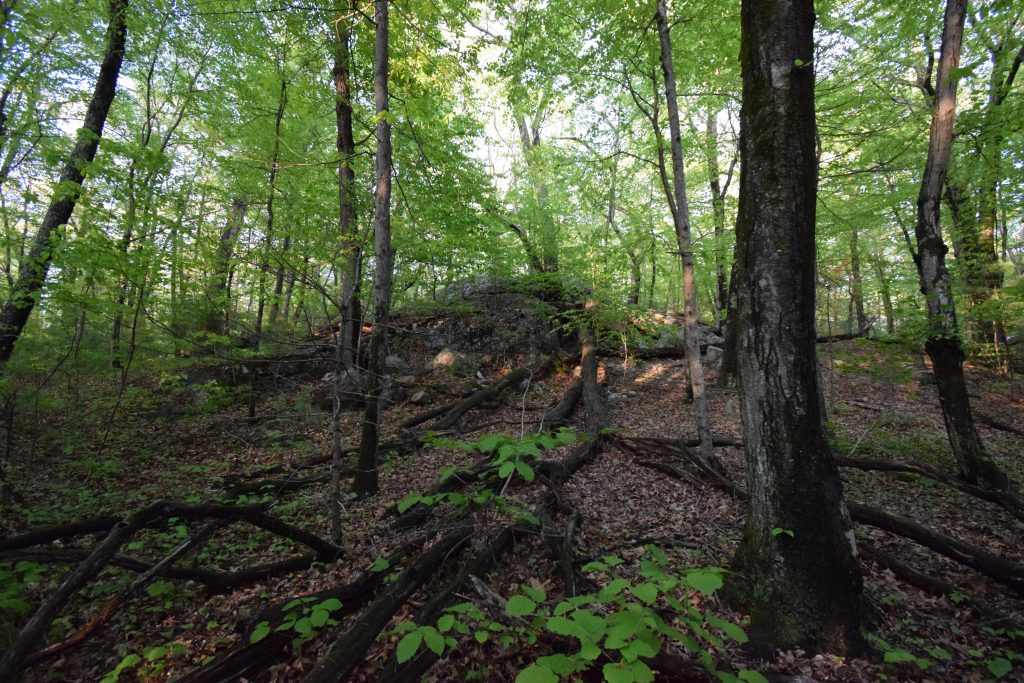
Upon reading a bit about the Pitch Pine, I learned that it often thrives in areas with poor soil conditions and rugged terrain, but is quickly outcompeted by many hardwood species and White Pine in other areas. It can sometimes thrive in young forests but will slowly disappear from the canopy as the stand matures, similar to other early successional species such as the white birch. This is why it’s usually a bit of a scavenger hunt to find Pitch Pine here. Because of its relative scarcity, I was later surprised to discover small summits dominated by Pitch Pine at Middlesex Fells to the north of Boston! The area is riddled with rocky surfaces, likely composed of Roxbury Puddingstone Conglomerate rocks, which are exposed at summits over generations as soil slowly erodes away around them. Only the tough little Pitch Pines, along with occasional shrubby oaks, seem to tolerate the remaining conditions.

In the Middlesex Fells, you can find Pitch Pine surrounding the old MIT Geodetic Observatory, and around Boojum Rock, both of which are marked on Google Maps. The route to the observatory, however, is very poorly marked in many areas, so you might find yourself bushwhacking a little if you attempt to reach it. It is quite an incredible transition to ascend from the forests of oak, hemlock, beech, birch, and maple in the rest of the Fells to a forest stand that looks like something out of a dry California climate. The environment at Middlesex Fells is also somewhat comparable to the nearby Prospect Hill in Waltham, which features many Pitch Pines around the summit, and showcases a similar transition from the base to the top.

These summit stands contrast strongly to areas where Pitch Pines can actually grow to their full potential. On summits, they tend to remain small and scraggly, perhaps more likely to die off and get replaced via weather events and loss of nutrients. If you want to see Pitch Pines at their largest near Boston, your best bet is to travel to the MetroWest region and explore the Desert Natural Area that spans the towns of Marlborough and Sudbury. This area is naturally very sandy, and the soil conditions cater to the growth of Pitch Pines and scrub oaks. The Pitch Pines here will reach heights closer to what we would typically see in White Pines. However, be on a close look out for Red Pines, which are not native to the spot but were heavily planted in previous decades. You can usually easily tell the two species apart by their bark, as Pitch Pine looks a bit more rugged with deeper fissures, while Red Pine has a more paper-like look.

The Hemlock Ring of Upstate New York

,

The Hemlock Ring of Upstate New York

The Adirondacks are a small, well-known mountain range in the northernmost region of New York State. The range is prized for its remoteness as well as for its opportunities for recreational tourism in an otherwise very densely populated section of the country. Like many northern mountains, the mountains here have plenty of coniferous trees that take advantage of the harsh climatic conditions, including spruce, fir, and hemlock. Of these three tree types, hemlock has an interesting, quite wide presence not only in the mountains, but also around the edges of the mountain range.

One of our excursions in the area lie directly within this known hemlock ring. We encountered many hemlock within the Fort Drum military base, in a park-like setting that is used for passive recreation by those living in and around the base. The base is the site of a National Historic Site, a mansion and surrounding grounds that once belonged to James LeRay, a Frenchman who had been sent by his father to the United States to collect on a wartime loan that went unpaid by the US government. While in the country, he met his wife and became a naturalized citizen. He believed he could regain his family’s lost fortune by investing in thousands of acres in Upstate New York, 300 of which he set aside for his private estate. Since much of this land previously belonged to LeRay, the nearby forest paths surrounding the mansion were also part of his estate, and some were previously cleared of tree cover. To get a read on where forest cover has regenerated within the past one hundred years, follow the wooded paths behind the mansion and the gondola to the grave of James LeRay’s granddaughter. There is a bell tower dedicated to her and a gravestone marking the site. Her grave used to be near the old entrance to the grounds, so she was not forgotten after her death. While the forest looks to be in a natural state now, much of it was altered and cleared during the time period in which the grave was placed. Due to this previous human activity we see what could be called a mid-successional, or middle age, forest type in this area, in which trees classified as old growth are rare.

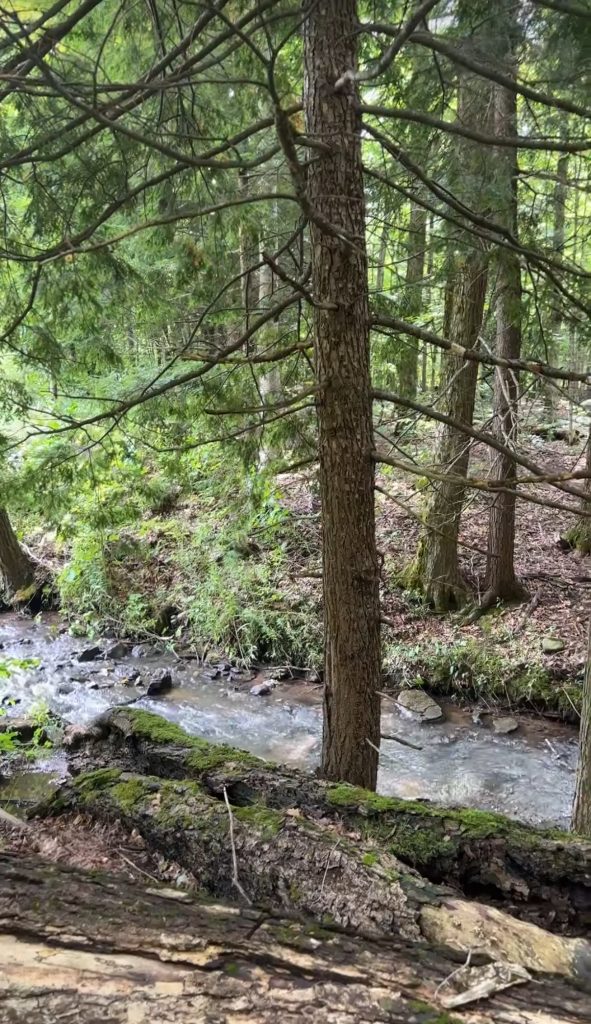
The tree cover consists of many yellow birch, sugar maple, and hemlocks. The hemlocks in the stand were amazingly healthy compared to many of the specimens found down southeast in the Boston metro, which are often suffering from hemlock woody adelgid infections. I did not find a single instance of woody adelgid on the trees that I observed, suggesting the insect has perhaps not made its way this far north, or is perhaps limited in capacity by the rather intense weather and temperatures in this area that tend to occur due to the nearby Great Lakes.

Hemlock needles in their favorite environment, shaded by other trees!

Based on range maps, it’s also not uncommon to see beech trees and red oaks in this area, but the latter are typically minor canopy associates and do not dominate the forest cover. However, because LeRay Mansion sits within a residential area on the base, it’s very common to see mature oak trees in nearby yards, where they were likely planted and face no canopy competition.

Interestingly, when we look at US government forest maps, we see a dearth of hemlock dominance once the elevation increases in the Adirondacks. This is potentially because of increased competition from spruce and fir trees, and some of the more exposed conditions not being as favorable to hemlocks, as they tend to like soil where water is plentiful and shaded areas. Hemlocks do still occur throughout the Adirondacks, but are often considered minor canopy associates, rather than a dominant species.

In the opposite direction, we descend into lowlands that sit along the edges of the St. Lawrence River, which in this area acts as the border between the United States and Canada. These forests also contain hemlock, but differ slightly in composition from the outer ring of the Adirondacks where LeRay mansion sits. This area is known as the clayplains and supports a greater dominance of various oak species than the nearby higher elevations. To me the oak dominance is much more reminiscent of the forests in eastern Massachusetts, though it’s important to note both areas have been heavily impacted by agriculture and development, which have affected the age, density, and composition of forests in both these areas, and their natural inclinations are not exactly the same.
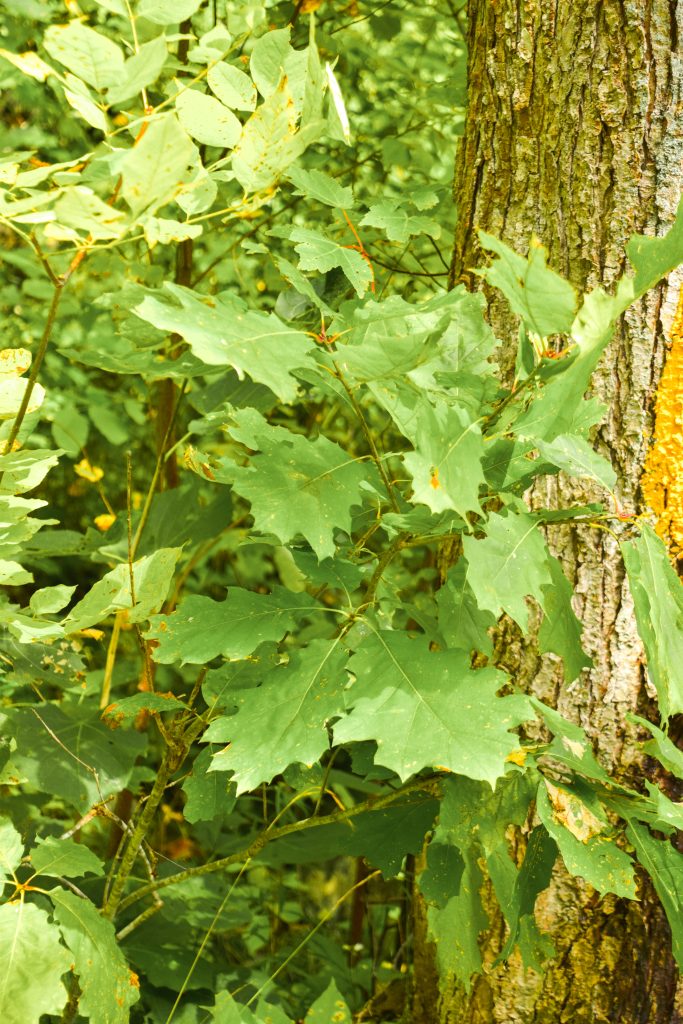
In and around the clayplains, we see a lot of active agricultural areas

If you want to explore the comparisons between forest matrices in detail for yourself, I recommend doing a deep dive at conservationgateway.org. This site contains extremely detailed range maps for areas across the country, and helped me start to make sense of the subtle forest changes I was seeing as I traveled across the northeastern US.

The Mountain of Oaks, Mt. Wachusett

,

The Mountain of Oaks, Mt. Wachusett

A common stereotype that surrounds the concept of a “mountain” involves either a summit populated with coniferous (evergreen) trees, or a treeless summit surrounded by coniferous forests below the treeline. Indeed this assumption holds mostly true for many mountains in New England, including the famous Mt. Washington, Mt. Cardigan, Mt. Monadnock, and Pack Monadnock. A strange phenomenon exists on the nearby Mt. Wachusett, however. Instead of a summit of conifers, Red Oak dominates the available soil.

Scrubby oaks, limited in growth by thin mountaintop soils and rocky terrain, dominate on the summit of Mt. Wachusett

Why might this be the case? Despite being only about 30 miles south of Pack Monadnock, and only 200 feet lower in elevation, the ecological communities of Mt. Wachusett’s summit differ drastically in character. Pack Monadnock showcases a beautiful array of spruce mixed with northern hardwood species mosaics (beeches, birches, and maples) on and around its summit. The very top of Mt. Wachusett, on the other hand, is a scrubby patch of red oaks surrounding the bare summit. It’s beautiful and fascinating in its own way, but a bit confusing.

That’s not to say Mt. Wachusett is completely devoid of northern hardwoods or spruce. In the ideal growing conditions on the northern slopes, many of these species tend to dominate, particularly the yellow birch. However, old growth oak is still a mainstay throughout these forests. Red spruce is limited to a narrow band on the northern slope just below the summit, but does not breech the ring of scrub oaks at the top.

Old growth yellow spruce, showing the cracks of aging, grows along the Old Indian Trail on Mt. Wachusett

There could be a few reasons for this interesting phenomenon. While much of the research on Mt. Wachusett’s ecology has involved documenting its old growth forest below the summit, there are a few historical and environmental clues that we can use to try and explain the oaks without doing scientific research ourselves! The further south we go in New England, generally the more frequent fire regimes become. While cold ravines and slopes are protected from fires for long periods of time due to their moisture retention, the exposed summit of Wachusett may not retain as much water, allowing fire regimes to historically reign more frequently in this area. Oaks are a species that tend to thrive in areas that are a little drier, and see a little bit more fire, than red spruce and northern hardwoods. In fact, red spruce is particularly susceptible to fire damage.

Another possible explanation is the more recent active disturbances on the summit, which included various recreational structures over the last century. Trees were at different points cleared out to make way for roads and buildings, but the areas of disturbance have evolved over time, potentially allowing some forest to grow back. Red oak is considered to be an early to mid successional species, while red spruce is a late successional species. While climate change may drive the spruce out of this area entirely at some point, without that factor we could have seen more spruce begin to grow in the shadow of these oaks over time, perhaps replacing some of them in the canopy eventually. These are just theories of my own imagination, though, so perhaps scientists will seek to definitively explore this question at some point.

Mt. Wachusett poses this question to us laymen, but it has been studied for almost two decades now thanks to the discovery of four distinct areas of old growth on different slopes of the mountain. This was a particularly incredible find for the area because there were virtually no known old growth areas east of the Connecticut Valley in Massachusetts of this forest type. Many of the other known old growth areas lie in swampy or sandy unfarmable land down towards Cape Cod and Plymouth, and these forests have a much different ecological composition than areas further from the shore.

Wachusett’s old growth areas showcase distinct characteristics depending on their location on the mountain. On the Old Indian Trail, which lies on a north facing slope, we tend to see a transitional hardwood forest, consisting of the aforementioned yellow birches of varying size and age, as well as extremely mature red oak trees, some of which have exceeded their expected lifespan. The harshness of the terrain and frequency of wind events have actually protected these strong old trees that have stood the test of time, knocking out weaker competitors and leaving an open canopy for them to flourish.

Old growth red oak shows crown damage and diversion over time due to the harsh conditions on the mountain. This tree was strong enough to survive generations of storms and wind events

There are four total distinctly studied old growth areas of the mountain. I have not yet visited all of them in person, but in three we can find similar mixed stands of yellow birch, American beech, red oak, and red maple, though the predominance of each type varies. On the southwestern portion of the mountain, we can also find a stand dominated by old growth hemlock.

For easy access to the most well known old growth area of the park, you will need to pay a $5 fee to enter the road that leads to the parking lot across from the Old Indian Trail. You can also start hiking from the base of the mountain closer to the ski resort village. When I went in the summer, the environment was fairly hot and humid with a decent number of mosquitoes, so bug spray is recommended during peak summer. Winter hikes may require microspikes and/or snowshoes depending on recent snowfall amounts. Like most hikes in Massachusetts, spring and fall are the best times for avoiding the most extreme of conditions.
The Desert at the Base of the Spring Mountains, Red Rock Canyon

,

The Desert at the Base of the Spring Mountains, Red Rock Canyon

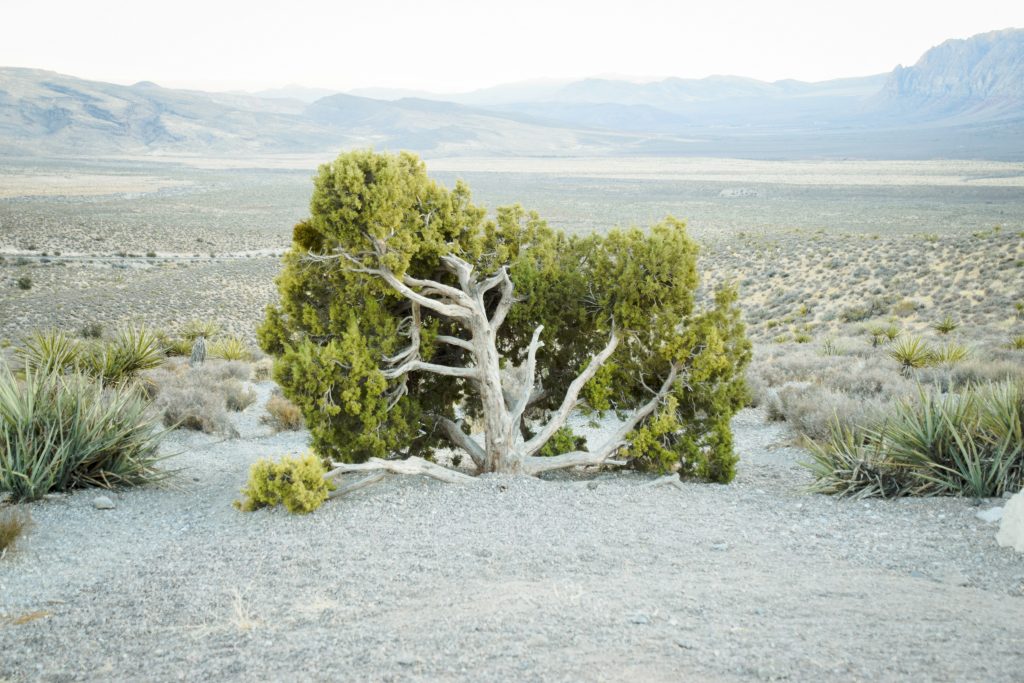
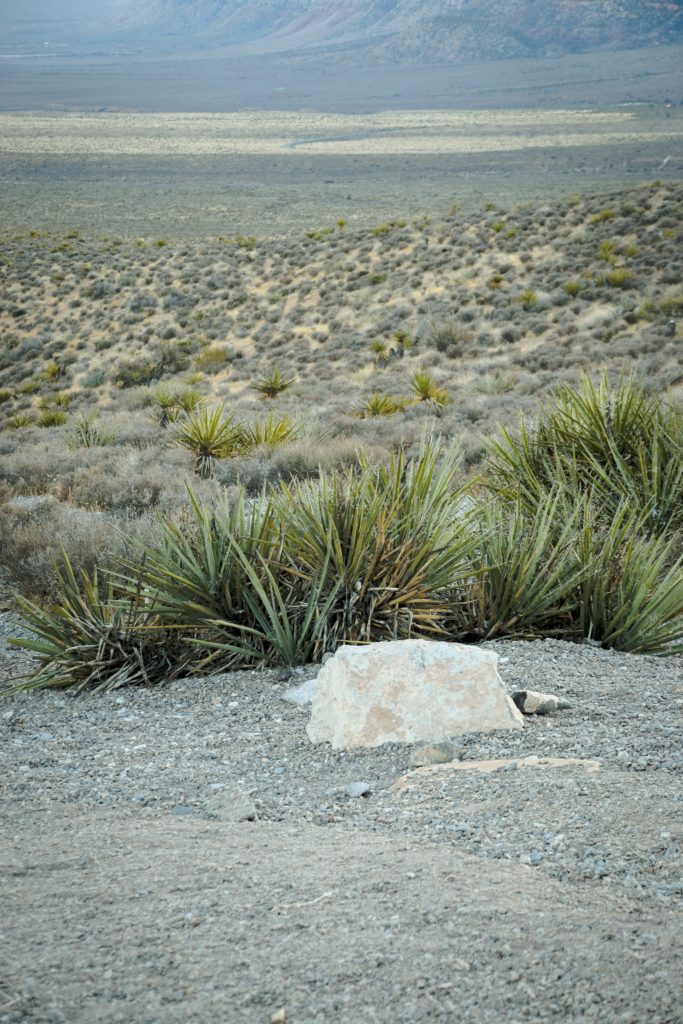
The Spring Mountains are a small mountain range that sit directly in the eastern rain shadow of California’s Sierra Nevadas. This mountainous terrain that descends into dry desert creates a unique transitional area between higher alpine environments and arid hills. The nature of the transition represents an analogue to the ecosystem convergence we discovered at Spearfish Canyon in South Dakota, but with a greater degree of aridity, or dryness, to the transition. The main ecological system, taking the place of the Ponderosa Pine and Oak forests found in South Dakota, is rather the western edge of the Mojave Desert, and is populated with Joshua trees, juniper trees, and Creosote bushes. In the shaded areas and highest elevations here, which sometimes contain hidden spring oasis’s, we actually find Ponderosa Pine! Generations ago, this area was just so slightly wetter and supported an entire forest of Ponderosa, as we see in South Dakota’s Black Hills and parts of Colorado and California. Here, they can only thrive in the cool, moist crevasses of the rocky desert slopes.

The main dry ecosystem, along with significant evidence of geologic activity, can be found in the Red Rock Canyon National Conservation Area found at the base of the Spring Mountains. Take the scenic loop through the park and you can find the creosote bushes in the distance. If you go in the winter, you will see their yellow flowers blooming. The creosote bush works opposite the traditional temperate plant yearly calendar, in that it blooms in winter and becomes dormant in summer, turning a brown color. Despite the seeming desolate nature of the place, there are hundreds of species that are only found within this park!

Lone Juniper Tree sitting against a wide open desert backdrop

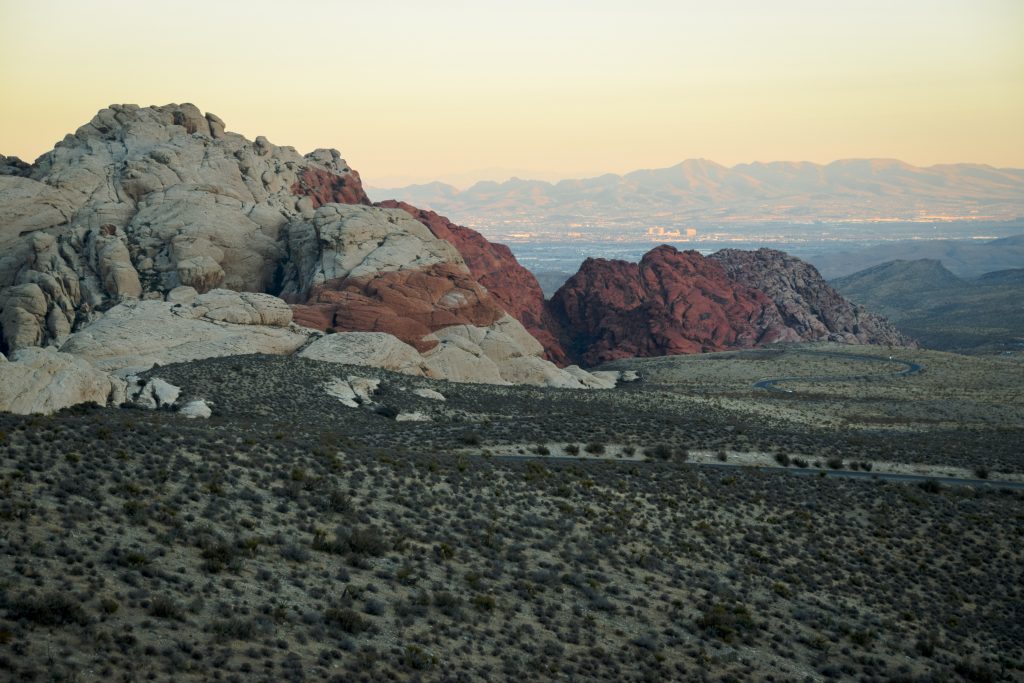
I highly encourage stopping at some of the scenic overlooks along the drive to take in the views and read the signage to learn about the local ecosystems. One such pull off, called the High Point Overlook, points out the wildfire scars you can see across the landscape. There have been three major fires below the overlook in the past 20 years, and the landscape, being one of slow plant growth and recovery, still bears distinct coloration differences from the untouched land around it. Normally, fires rarely occur in such a desert ecosystem, because there just isn’t enough fuel in the landscape to ignite and sustain them. It’s a plethora of invasive grasses, recent newcomers to the desert, that will readily ignite and spread fire, often caused by lightening strikes. This increased fire risk represents a significant risk to the existing desert flora, who aren’t adapted to fire regime conditions.
The park is also a bit of a bucket list destination for geology enthusiasts. It is one of the few places on earth where we can directly observe the shifted layers of a thrust fault above ground. Thrust faults occur when two tectonic plates collide, causing one plate to slip up and over the other, which can result in reversed layering of the rocks. In Red Rock Canyon, we can see an older limestone layer, which formed around 500 million years ago when Nevada lay under a great sea, sitting on top of newer sandstone formations, which appear red from oxidation of the iron in the solidified sediment (we can see the results of a similar oxidation taking place in South Valley Park in Colorado, which we wrote about in a previous article). The sedimentary rock itself was formed from old sand dunes that existed in the area long after the sea had disappeared.

We ran into vehicle issues on the way to the park and were not able to get out and hike before the winter desert cold set in. Nevertheless, there is a very easy, low elevation gain hike that you can take to get your bearings in the area, called the Moenkopi Loop, which is accessible from the scenic loop and is about 2 miles long. From October through May, you will need a timed entry pass to enter the scenic loop, which you can purchase at recreation.gov.

If you choose to go hiking, keep in mind that the desert is a land of extremes. Winter daytime temperatures are mild and great for hiking, but the sun and dry air can still cause dehydration, so bring plenty of water. Bring a hat and sunscreen to protect yourself from the sun. Also be on the lookout for rattlesnakes and tortoises. Sightings are rare in this area but give them a wide berth if you see them. Rattlesnakes can be dangerous if they feel threatened, and tortoises will urinate in fear and lose their precious internal water, which can cause them to die. If coming in the summer, the prior all still applies, but sunrise and sunset may be better times to hike due to the extreme midday heat.

A Hemlock Oasis in the Boston Metro

,

A Hemlock Oasis in the Boston Metro

In my previous life as a city dweller, I would never have known to search for hemlock trees in Massachusetts. I moved from the mountain west directly into an area with a highly dense population and little native forest cover. With the pandemic, there seems to have been a renewed interest in the outdoors and native ecosystems, and many people living in the city now may learn about the incredible hemlock trees, but are none the wiser on where in the world to find one in a dense metro such as that of Boston. It’s even more difficult to find them in the region since the topography has been altered dramatically by human intervention, eliminating the scant locations in which hemlocks may thrive. Having explored many different nature reserves and parks in the area, I currently know of two locations within the I95 highway belt around Boston where hemlocks can be observed: Virginia Wood in the Middlesex Fells and Hemlock Gorge in Newton.

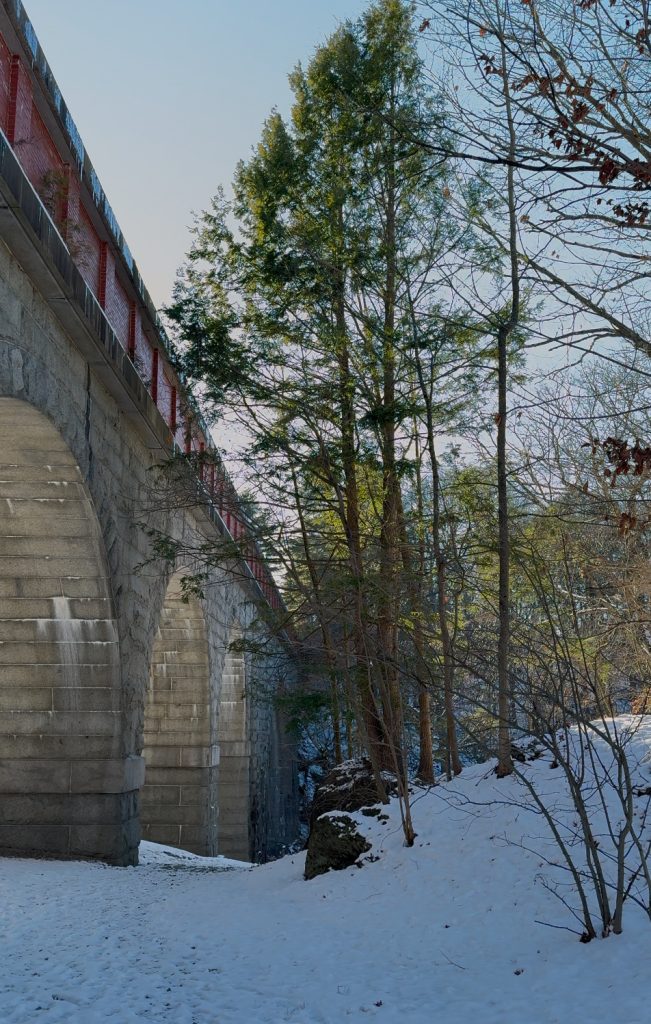
A few hemlocks stand next to the historic bridge that crosses the gorge


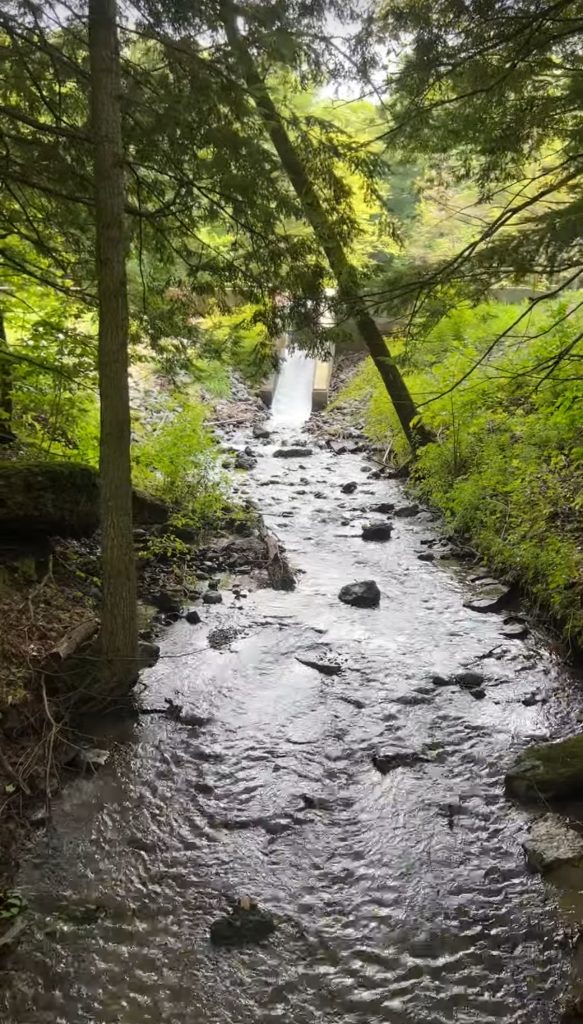
Hemlock Gorge maintains a unique topology that favors hemlock trees. This small gorge creates a northeastern facing slope that hemlocks still manage to dominate as the overhead species. However, I didn’t see too many young hemlocks in the understory. They particularly thrive in cool and wet areas, and it’s possible that the urban development around the area has warmed the microclimate, allowing other species to begin overtaking the hemlocks. Additionally, hemlock deaths due to the hemlock woody adelgid infestation may have created even more opportunities for other tree species to take root and thrive here.

In the northwestern area of the park, the hardened sweet birch dominates. Similar to the Hemlock, Sweet birch also prefers moist soils and tends to live on cooler, northern facing slopes. At least one specimen was old enough to showcase the rarely seen cracked bark characteristic of older trees. Trees typically don’t begin to develop this cracked appearance until at least 70 to 80 years of age. The other sweet birches in the area were significantly smaller and had much smoother bark, perhaps individuals that quickly took advantage of a canopy opening as many birches do. The cool, moist nature of this environment also makes fire unlikely, to which sweet birch is particularly susceptible.

At the highest point of the park overlooking the gorge and to the west of the main bridge attraction, white pines dominate. They tend to thrive on virtually any soil type in the area and are prolific seeders in disturbed areas. They also can have an advantage growing on very nutrient poor, rocky soils, which I suspect may be the case here.

The last species found was the American Beech, which was found in many areas throughout the park, but some older specimens were found in the northwestern area of the park, just southwest of the sweet birch stands. Most of the younger beech trees were suffering from beech bark disease, though given the time of year I couldn’t verify whether they also suffered from beech leaf disease. The beeches that exhibited marcescence, or winter leaf retention, had no obvious signs of the disease. The oldest individuals were the target of many word carvings done by passerby over the years, often the most carved into tree because of their incredibly smooth bark.

A young beech tree bears the scars of beech bark disease

Hemlock Gorge is accessible via a parking lot on the northeastern side of the park. However, some people who probably live in the area seem to use this lot to store extra vehicles, so parking may be limited. Alternatively, city-dwellers can take the Green Line from Boston to Eliot Station, but a 20 minute walk to the park from there is required. I was there on a very cold winter day, but even then the park’s popularity was apparent and I encountered a few groups of people and individuals enjoying the park.

A Fragmented Landscape in Western Washington

,

A Fragmented Landscape in Western Washington

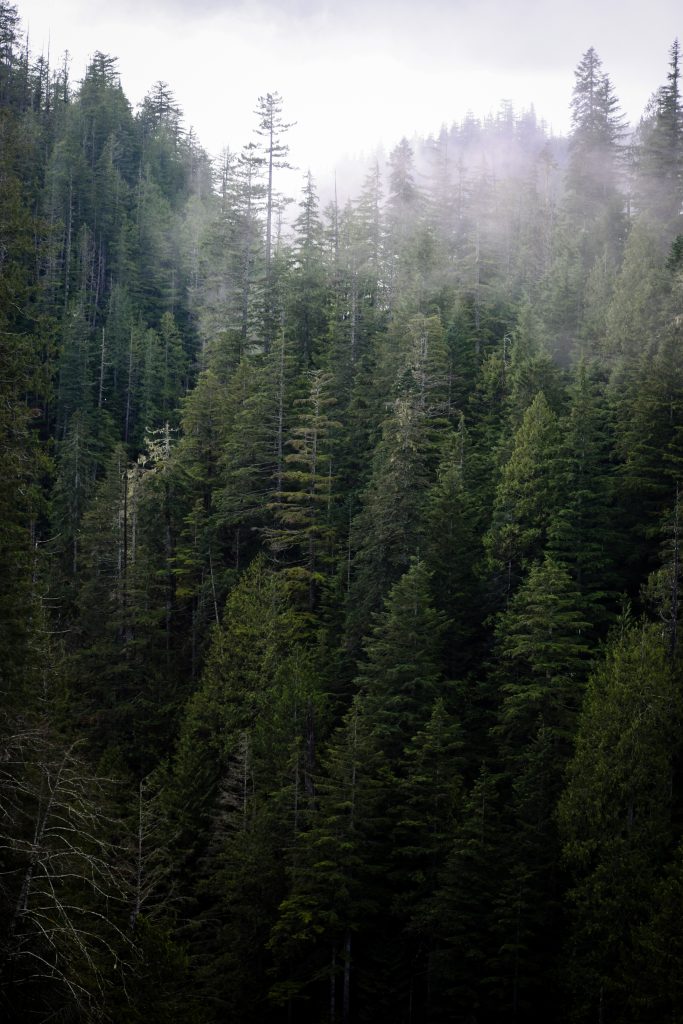
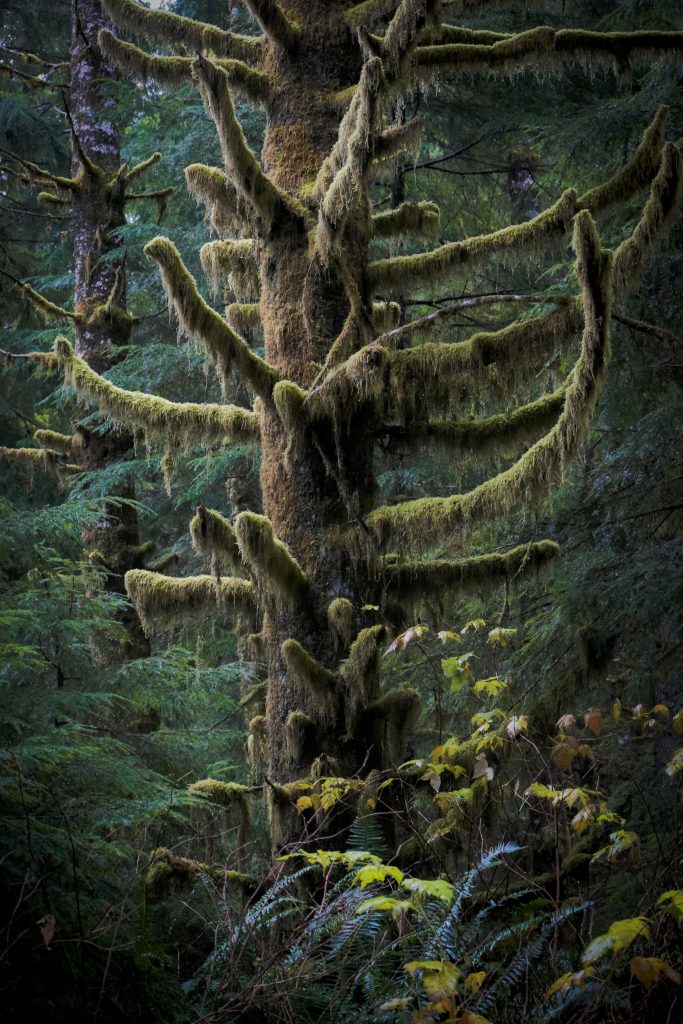
On the East Coast, Midwest, and Mountain West, we often hear stories of the pristine old growth temperate rainforests of the Pacific Northwest, a magical, untouched realm only accessible via the remote lens of social media. These lands of ancient giants steeped in moss and lichen are presented in stark contrast to both the barren landscapes of the rest of the West and the human-warped treescapes of the East. The stories presented, however, are a bit of a fairy tale, a sheen that glosses over the messy truths of human impact on these unique landscapes. If you want to see the entirety of the forest in its present state, go not to the protected Hoh Rainforest or the lands of old giant cedars. Go to the local town forests and the lands of logging operations. Stand in those lands and imagine that once they might have looked more like the protected spaces. Contemplate where they are in their recovery, and how far they have to go. Imagine the hectares of land that are still being lost near Seattle despite protection efforts, and understand that 6 foot wide conifers will never stand where they once stood again. It’s a deep, immeasurable thought space, to read the entire forested landscape.

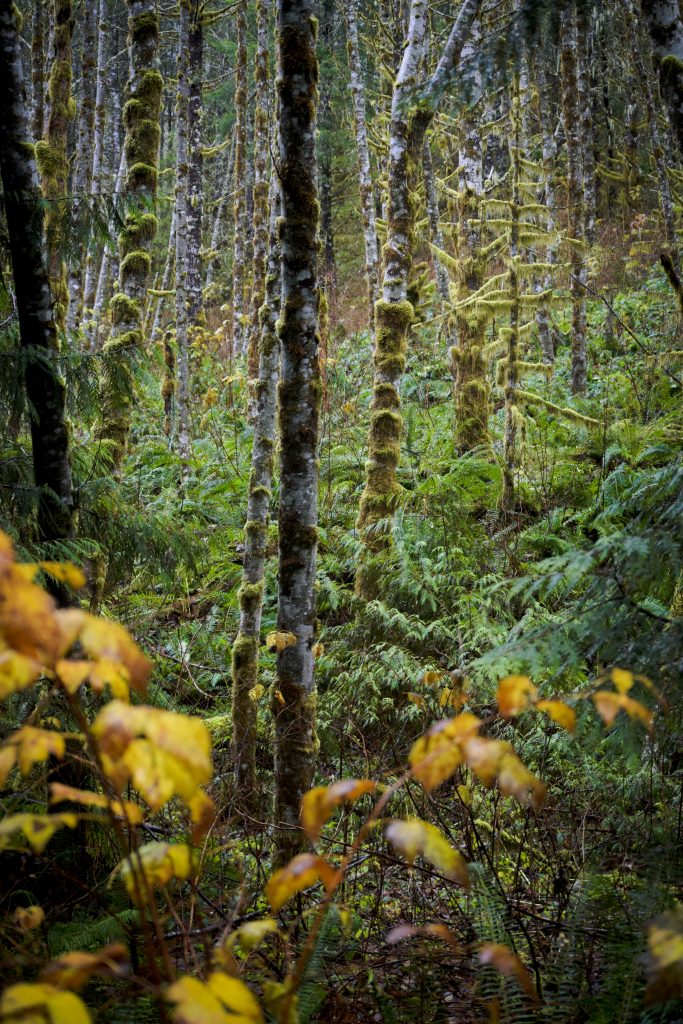
On a recent trip out to Seattle with no real agenda, other than to visit some folks, see the city a bit and hopefully get some outdoor time in, this is exactly what I ended up doing, standing in these half baked forests as they attempted to return to form. Regardless of their state, I was still amazed. This was still a rainforest of a kind I had never seen before. The combination of massive ferns, draping lichens, and a heavy conifer canopy created a combination that is just uncanny to most of us, because it exists nowhere else in the country, and frankly almost nowhere else in the world. To understand why this is, we have to take a look at where these temporate rainforests tend to occur.

Temperate rainforests are often much more limited in range than their tropical counterparts, and they only tend to exist on the Northwestern edges of continents in the northern hemisphere. Another prominent example of a temperate rainforest biome is the United Kingdom, which we don’t often think of as rainforest because its forests have been so heavily decimated by human activity over millennia (and actually served as a counter example for the United States when it was developing its own conservation programs). Both the Pacific Northwest and the United Kingdom are unnaturally warm and rainy for the same reason: ocean currents. In the northern hemisphere, ocean currents run counter clockwise, meaning that when the current is at its lowest and warmest, it begins to travel northwest, bringing all that hot water with it and warming up the terrestrial climate, ultimately turning what would be a snowy, cold place into something that sees much more rain than snow. This phenomenon explains the mossy nature of the place, but it doesn’t explain the dominance of conifer trees in the region.

To explain the conifer trees, we need to look at the overall temperature fluctuations in the Pacific Ocean. While in the winter the current brings warm water up to the coast, in the summer, the water is actually cooler than the surrounding air, creating a cooling effect in the summer. Many types of evergreens are adapted to cooler temperatures and don’t thrive in very hot environments. They are also adapted to periodic drought conditions, which can make life difficult for broadleaf trees. Oddly, summers in the Pacific Northwest are exceptionally dry compared to the rainy winter season. This occurs due to a seasonal shift of the atmospheric phenomenon known as the Hadley Cell, which tends to push dry atmospheric air into the region. This dry season is the only opportunity broadleaves have to extract solar energy with their leaves, but their leaves also rely on moisture in order to function properly. Thus, we see hardwoods widely outcompeted by conifers in this area, and where they do appear, they tend to be early succession species that are quickly replaced in the forest development process.

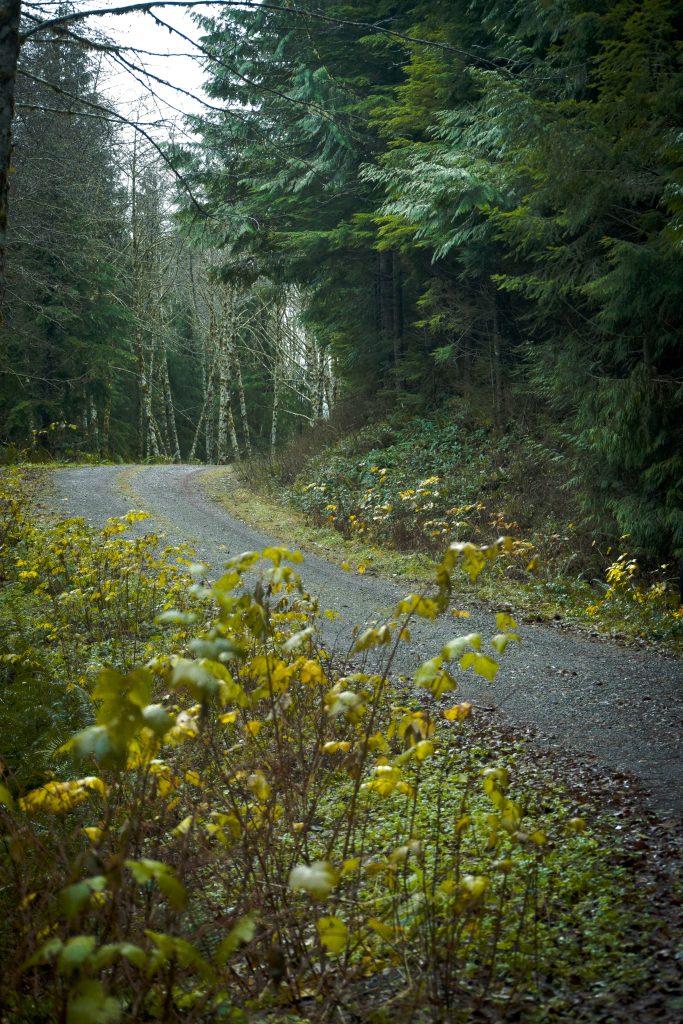
During our west coast adventure, we saw this heavy proportion of conifers even in the regrowth areas. However, many of them were actually planted species to replace the prior clearcuts done by loggers in the past. On land that was likely an old agricultural zone, as well as in logging areas seemingly left to regrow on their own, we did see a higher proportion of hardwood species, particularly bigleaf maple. The old logging areas we discovered were near Spada Lake in the North Cascade region, but were mostly no longer being used for clearcutting purposes, as the area has become more desirable for recreational usage in recent years. The scale of these trees looked about as you would expect an older, perhaps 100 year old managed forest to look in the eastern US, but the trees that were dated by sign were only 40 years old! Quite young for such long lived species as western hemlock and western red cedar, and given a few examples we encountered in the valleys, likely to get much bigger if the competition thins out over time. These replanted forests stood at the foot of incredibly steep Alp-like mountain slopes, which only occasionally showed themselves through the dense, low-lying clouds of late November. Snow mostly seemed to only accumulate near the tops of the mountains, with low-lying areas remaining a wet, muddy rainforest.

Given the prior research discussed, visiting this area is likely quite different depending on the time of year. Be prepared for mud and rainy, drizzly conditions from fall through spring. Summer will be less likely to rain, but wildfire smoke from the rain shadow regions becomes more likely during this time of year. In late November, the conservation areas around Spada Lake were virtually empty of other people, leaving the conifers to silently experience their fastest growing season of the year.

Discovering Forest Mosaics in Upstate New York

,

Discovering Forest Mosaics in Upstate New York

Having spent most of the past several years in eastern Massachusetts, I have not had much opportunity to really dive into the minute differences between the forest ecosystems of the eastern United States. I had heard of a few unique locations that differed from the oak and pine-dominated lowlands of my home region, such as the temperate rainforests of the southern Appalachians, as well as the northern hardwood forests of the northernmost regions of New England. I didn’t stop to think much, however, of how these northerly latitude forests adjust as we move westward into New York state past the remote Adirondack mountains and beyond into the Midwest. Subconsciously, I believed that these forests would resemble the oak-pine dominated areas of Massachusetts that extend south into Rhode Island, Connecticut, and beyond.

With this line of thinking I recently visited upstate New York, in the northernmost region just south of the Canadian border, about an hour’s drive south of Ottawa and near the St. Lawrence River. What struck me most as I was driving westward away from the coast of Massachusetts was the seemingly slow reduction of oaks in the canopy. They almost completely disappeared as I reached the Berkshires, the famous sub-range of the Appalachians in western Massachusetts. As I continued into New York, for the most part I saw very different tree combinations, known as northern hardwoods. The occasional dominance of oak pine forests seemed somewhat tied to altitude, latitude, and local soil conditions.

Northern hardwood forests are very beautiful and tend to have a lighter, airier feeling than both the oak-pine forests in the south and the spruce-fir forests of the north. They tend to be dominated by sugar maples, american beeches, and yellow birch trees. We also see hemlock conifers dominating in certain wetland areas that they are adapted to. At higher elevations, colder regions and more northerly latitudes, these northern hardwood forests start mixing with more spruce-fir forests, while in warmer, drier locations, they start to mix in with the oak-pines, as they do in eastern Massachusetts. In some areas, particularly Maine and other parts of northern New England, paper birch can also be a dominant canopy tree in early succession forests, or forests that have recently been clear cut, blown down, or damaged in some other way.

Despite a comparative dearth of oaks in comparison to eastern Massachusetts, they are not completely missing from the canopy near the Lawrence River. Where oaks have been able to dominate have sometimes been human curated or influenced, but oaks can still be found often as understory shrubs in northern hardwood forest settings, as well as fully dominant on soils that are thinner, rockier, or clay-based (which is a more common soil type as we move closer to the St. Lawrence watershed). In Massachusetts, their dominance is presumed to be influenced by prior fire regimes and clearing of forests for farmland, which has changed the forest composition significantly. Fires are believed to help stimulate acorn growth and clear out species that compete with oaks, though red oaks do slightly better in wetter environments than other varieties. Southern New England still sees significantly fewer fires, however, than ecosystems in the westerns half of the country.

On a short hike down to a view of Cedar Lake, we found these tree dominance trends in full effect. Beech trees were plentiful, but often suffering from beech bark disease, a fairly common ailment to see on an American Beech. Yellow birch appeared to dominate on disturbed sites, such as over stumps and logs of old trees, with occasional white birches making their appearance on the edge of the lake, where they could capture more sun rays. Sugar maples seemed the predominant maple in these forests, which contrasts starkly with the red maple dominance in Massachusetts and further into the south (we did see a few in the understory). I don’t even recall encountering the invasive Norway Maple, which is easily mistaken for sugar maple and very common in eastern Canada and New England. The prevalence of these trees up north supports a strong maple syrup industry that likely isn’t sustainable in southern New England. Red oak was found in the understory, but rarely as a dominant member of the canopy. However, research into other trails in this area has suggested oak and white pine dominance on the rocky ledges above the lake, where the northern hardwood species may struggle to grow.

At the time we went in August, the trail was very overgrown, buggy, hot, and humid. The trails here are also very poorly marked, so it’s easy to take an unintended route down to the lake, but it was easy to see the large body of water through the trees which helped with navigation to a viewing spot. The route down to the lake was steep and muddy, and apparently is meant to function as a canoe launch, though it looks incredibly difficult to get a canoe down the steep, rocky and muddy hill! The area has a history of logging, farming, and fires started by humans, so most of it likely doesn’t represent true old growth forest, but the area we explored seemed to be in a mid successional stage of forest development. While much of the trail’s state suggested a lack of frequent maintenance and lack of heavy usage, going slightly off the beaten path to explore such areas provides us nature enthusiasts the unique opportunity to explore these pristine northern hardwood forests in an area where they face fewer active disturbances.

Ecosystem Convergence in Spearfish Canyon

,

Ecosystem Convergence in Spearfish Canyon

It is a rare, special place where we can easily see the boundaries between so many known ecological systems. On the east coast, the forest mosaic changes subtly and gradually as we move through the landscape, central hardwoods such as oak blending seamlessly into northern hardwood trees such as beech and sugar maple. It can be hard to tell where the forest mosaics of dominant species are adjusting and why. Not so in the mountain west region of the United States, where drastically different ecosystems clash on full display in a beautiful fashion.

One particularly fantastic example of this phenomenon is Spearfish Canyon, which sits on the northern edge of the Black Hills in South Dakota, the oldest mountain range in the United States. The Black Hills is famous for Mount Rushmore, but is often overlooked for its unique proximity to the Rockies, northern latitude, and lower elevations of the Great Plains. Go to Mount Rushmore alone, and you will likely only see one of four special ecosystems in this area, the Ponderosa Pine forest, and you may only see it from a distance!

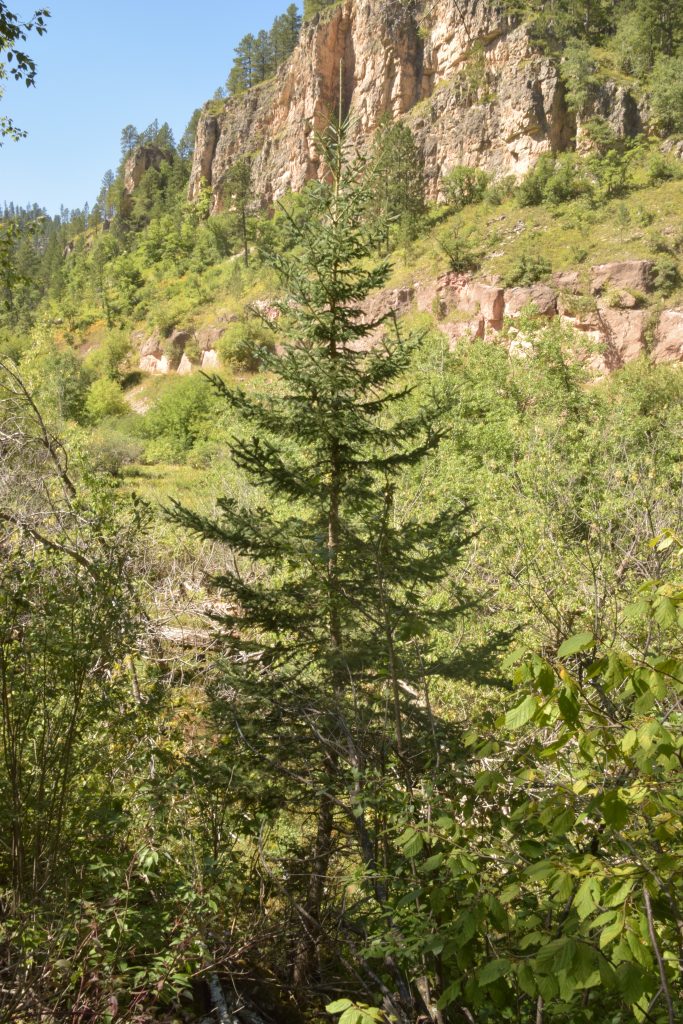
Spearfish Canyon features Ponderosa Pine forest, particularly in the upper elevations. However, it is also host to various other species that we don’t often find in other Ponderosa Pine dominated areas. The white spruce is an incredibly striking figure in the landscape, a perfect Christmas Tree shape in comparison to the often jagged, fire resistant Ponderosa Pine. It only thrives in cooler, wetter zones of the Black Hills, and does not spread past the Wyoming border at all. Ecologists are not entirely sure why this is the case, but upon my anecdotal observation, the region past the Wyoming border seems particularly drier and more fire prone than the eastern portion of the Black Hills. This may have been due to particular seasonal conditions at the time that I went, but assuming it’s a trend it may explain why white spruce doesn’t like it over there!

Another surprising find was paper birch, also known as white birch. In certain areas of New England forests, these trees are very common, though they can often be seen sporadically throughout New England. In the nearby Colorado Rockies, white birch don’t exist at all. They also seem to prefer more moist areas and congregated around the streambed in the canyon. Interestingly, white birch populations seem to have more complex genetic mixing and variation than previously believed. The leaves on these white birches were strikingly different from some of the examples I recall encountering in New England. They tend to have narrower, more pointed leaves, whereas the white birch appearing in southern New England had a more rounded leaf shape. You can read more about white birch species variation here.

The last species we see a lot of, which provides a striking contrast to the prior mosaic, is the prevalence of oak trees and shrubs in the region. Bur Oak is presumed to be the most common species in this area, but some examples I saw seemed more reminiscent of Gambel Oak, which is more common in Colorado and further south. Only recently have people begun reporting findings of Gambel Oak in the Black Hills, and since they readily hybridize with Bur Oak, identification becomes even more difficult. It’s unclear whether they are spreading here naturally or if they are a sort of “escaped” cultivated species, since Gambels and hybrids are readily sold in plant shops.

Add all of these distinct species up against a backdrop of limestone canyon walls and a variety of waterfalls, and you end up with one of the most spectacular scenes in the country. A variety of hikes, ranging from easy to difficult, are available for exploring this incredible ecosystem. We took the Roughlock Falls Trail, which was mostly flat with very slight inclines and is about 2 miles out and back from the start of the trail. There was plenty of parking at the start of the trail, and even more as you follow Route 222 up towards the waterfall, along with picnic areas that were quite busy in early September. The terminus of this main trail ends at the waterfall and is easy to find. Summers tend to be hot, sunny, and muggy, so bring a hat, sunscreen, and plenty of water!