The Almost, But Not Quite, Rainforest of Florida’s First Coast
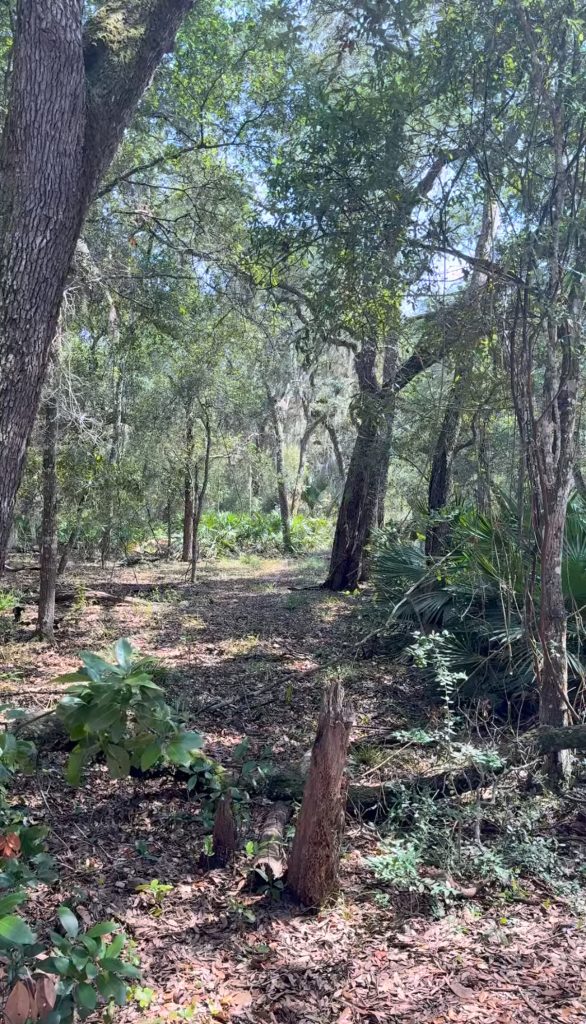
To see moss or lichen on a tree is to be in a rainforest, right? This was the assumption I told myself as a kid growing up on a dry short grass prairie. My experience with forests, particularly rainy ones, was obviously very limited. For years and years afterwards I vacationed with family in Florida, where we would spend most of our time on the beach or at a theme park. As we drove to our desired destination, I recall looking out at the dense forest canopies all across the state and being completely confident that I was looking at a rainforest. If I had ever spoken to an ecologist as a teenager, they probably would have told me not so fast!
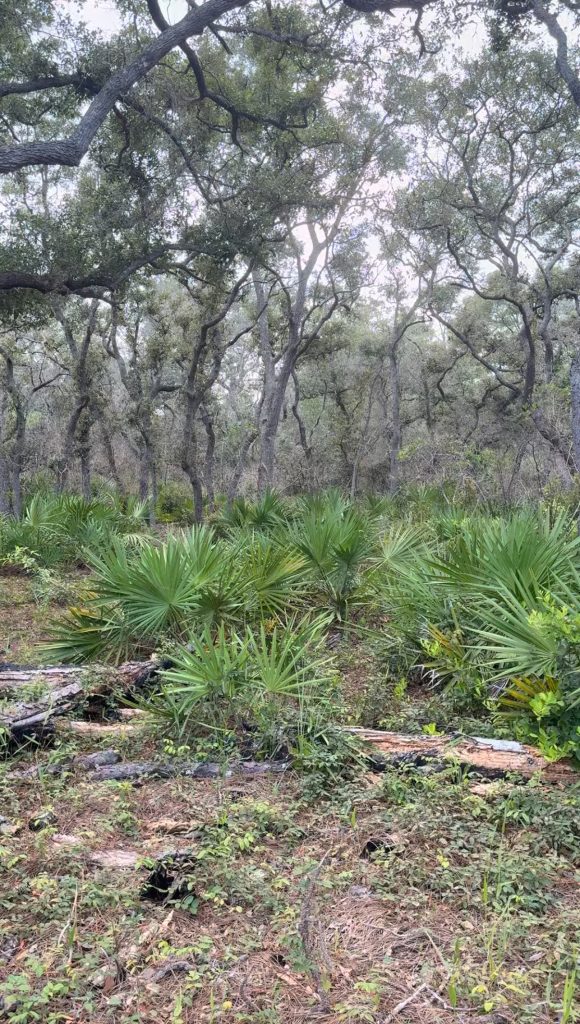
Years later, I returned to Florida for an extended vacation and explored a bit more of the natural landscape. I discovered mostly a mix of salt marshes and scrubby flatwoods. The scrubby Flatwoods in particular were fascinating to me because of their inherent dry qualities and propensity for fire, a contradiction to my previous assumptions about Florida being a rainforest that could never experience the wildfires seen across the western United States. Scrubby flatwoods are discussed further in our previous story about the Manasota Scrub Preserve near Florida’s gulf coast.
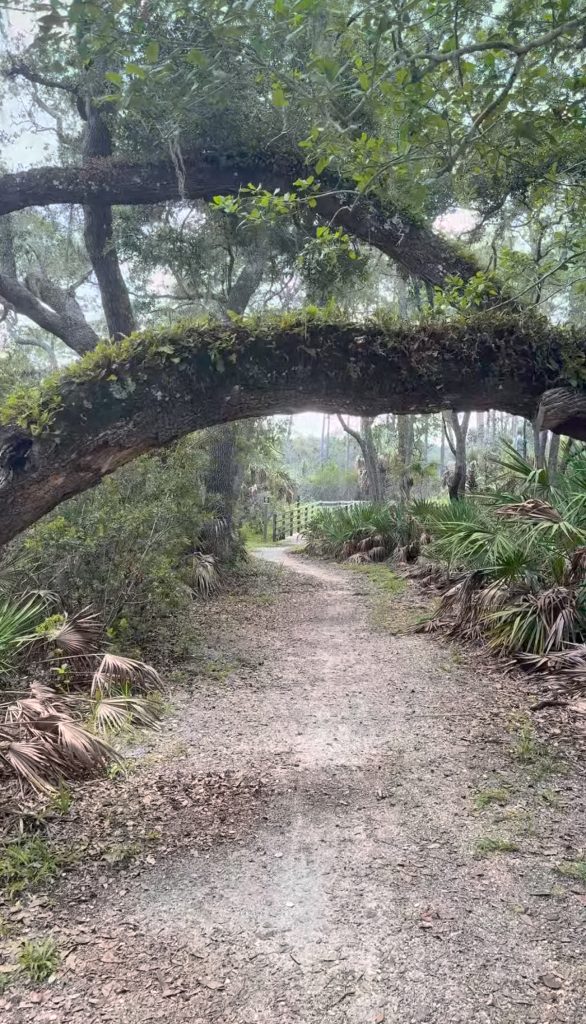
So the flatwoods aren’t actually rainforest, okay, so what? Surely most of the rest of the state must be, right? Not so fast again. Upon returning to northeastern Florida, sometimes known as the First Coast for its deep historical roots, I checked out some local nature preserves and was 100% convinced I was in a rainforest! On Amelia Island, which is just south of the Georgia border, a stunning state park with an incredible historical fort sits at the very northern tip of the island. It’s a great spot for history buffs, but also sports a nature trail that meanders through a dense, swampy forest. We took a short loop through this trail and were constantly pushing giant palm leaves out of our faces as we kept watch for alligators and admired the lichens and mosses hanging off the trees. How could anything but a rainforest produce so much green bounty?
The reality is that all of these forest systems exist on a gradation that is difficult to classify with categorical terms. This area, and much of the forest leading up to the actual borders of Florida’s real rainforest, is probably the closest you get to being in a rainforest without actually being in one. But according to ecological definitions, it just doesn’t make the cut.
So how do ecologists decide what is a rainforest and what isn’t? They determine this definition with the use of multiple measurable criteria. The criteria is not always strictly defined and relies of the presence of multiple ecosystem markers, as well as the ecosystem’s location relative to the equator. Generally, rainforests are biomes with high enough amounts of rainfall that support the presence of a three-tiered plant canopy, support for epiphytes (plants that grow on other plants), and sometimes lack of dominance of any particular tree species.
In Florida in particular, the climate ranges from a subtropical to tropical climate classification. In subtropical and tropical environments, an ecosystem is classified as a rainforest climate when there is essentially no dry season and at least 2.4 inches of rainfall per month throughout the year on average. Only one area of Florida meets this environmental definition, and this region encompasses part of the southeastern corner of the state surrounding Cape Canaveral and Miami. The rest of the state has a marked, discernible dry season, leading to ecosystems that have evolved to tolerate fire regimes.
Many online sources will support the idea that Florida does not support any tropical rainforests. The likely reason I can discern from this is that the climate area that would support rainforests at all is highly developed, with little native ecosystem remaining for classification and study. But it’s important to note that this insinuation is an oversimplification of Florida’s climate capabilities sans human influence. It is likely that Florida’s natural rainforest would not be as diverse or experience as much rainfall as locations such as the Amazon, but they would likely meet our modern definition for what makes a rainforest.
Since we don’t have a super clear way to compare the edge of Florida’s rainforest region to the First Coast due to these development patterns, we can compare with a little more specificity to the forests of large rainforests like El Yunque National Forest of Puerto Rico, the only protected tropical rainforest in the United States’ protected national forest system.
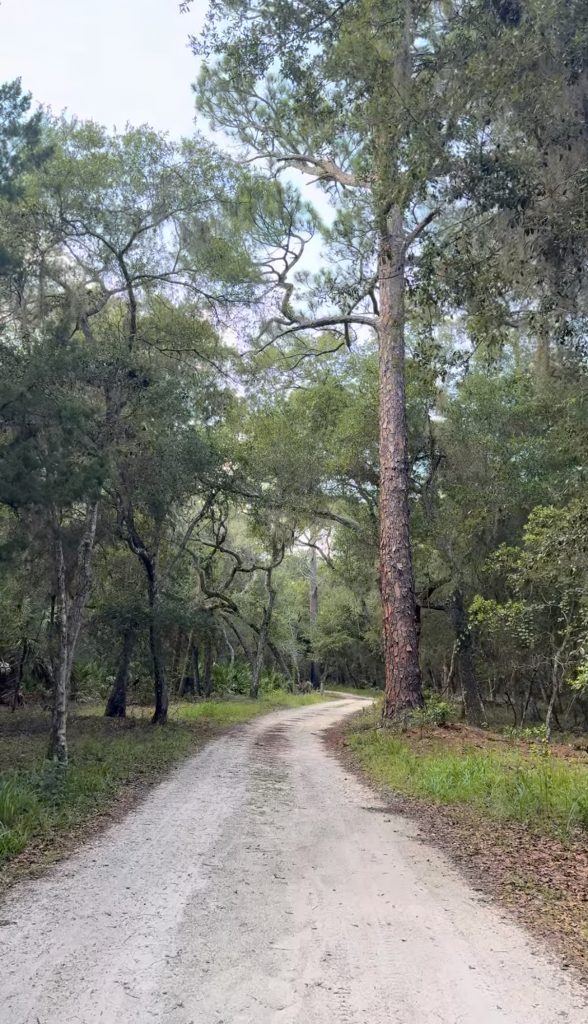
As noted before, the presence of epiphytes, or plants that grow on other plants, is one defining characteristic of rainforests. The forests of the First Coast do actually contain a few epiphytes, such as the famous Spanish Moss that grows on Live Oak trees, as well as some fern species. However, El Yunque contains a greater diversity of epiphyte species. Diversity of tree species is also much greater in a forest like El Yunque, which boast multiple hundreds of tree species. The forest of the First Coast tends to instead be dominated by a more limited number of overhead species, such as the Live Oak and Slash Pine.
Lastly but perhaps most importantly, the sloped areas of El Yunque receive over 200 inches of rainfall per year, the highest of all US national forests. Meanwhile, the First Coast city of Jacksonville receives an average of only 52 inches per year. Compare this average to Miami, the tropical rainforest climate of Florida, which receives about 61 inches of rainfall per year, putting it just over the general threshold for rainforest categorization. We can imagine that such an environment would not meet the heights of diversity seen in El Yunque, but would perhaps support a slightly different ecosystem and broader set of species than the First Coast. This comparison highlights the gradient nature of these ecosystem classifications.